
Check tire pressure cold, with a gauge, against the sticker in the driver's door jamb, not the number on the tire. Then check tread with a penny. If you can see the top of Lincoln's head, the tire is worn out.
Tires are the only part of the car that touches the road. Low pressure wears them out fast, hurts your gas mileage and makes the car handle worse in an emergency. Most people never check until a light comes on.
Here is the good news. This is the easiest check on the whole car. You need one cheap gauge and ten minutes. Do it once a month and before any long trip.
What You Need
- A tire pressure gauge (digital or stick type)
- A penny and a quarter
- An air pump or a gas station air machine
- A flashlight, if it is dark
Safety First
- Park on flat ground away from traffic, with the parking brake set.
- Never fill a tire past the max pressure printed on its sidewall.
- If a tire has a bulge, a deep cut or wire showing, do not add air and drive. Put the spare on or call for help.
Read Your Tread in Ten Seconds
Put the coin head first into the groove. What you can see tells you where the tire stands.
Step by Step
Find Your Correct Pressure
Open the driver's door and look at the edge of the door frame. There is a sticker with the front and rear pressure in PSI Pounds per square inch. It is the unit your tire gauge and the door sticker use for air pressure.. Some cars put it in the glove box or on the fuel door. Your owner's manual has it too. Front and rear can be different, so read both.
Check While the Tires Are Cold
Driving heats the air and makes the reading go up. Check first thing in the morning, or after the car has sat for about three hours. A cold reading is the one that matches the sticker.
Read Each Tire
Unscrew the valve cap. Press the gauge straight onto the valve stem, firm and quick, until the hissing stops. Read the number. Write down all four so you do not forget which one was low.
Add Air in Short Bursts
Fill a little, then check again. It is easy to overshoot. If you go over, press the small pin in the center of the valve to let some out. Put the valve cap back on when you are done, because it keeps dirt out of the valve.
Do the Penny Test
Put a penny into a tread groove with Lincoln's head upside down and facing you. If you can see the top of his head, the tread is at 2/32 of an inch or less and the tire needs to be replaced. Try three spots across the tire, inside, middle and outside.
Do the Quarter Test for Rain
Do the same thing with a quarter and Washington's head. If you can see the top of his head, you are at about 4/32 of an inch. The tire is still legal, but it will not grip as well in rain. Start shopping for tires.
Look for the Wear Bars and Damage
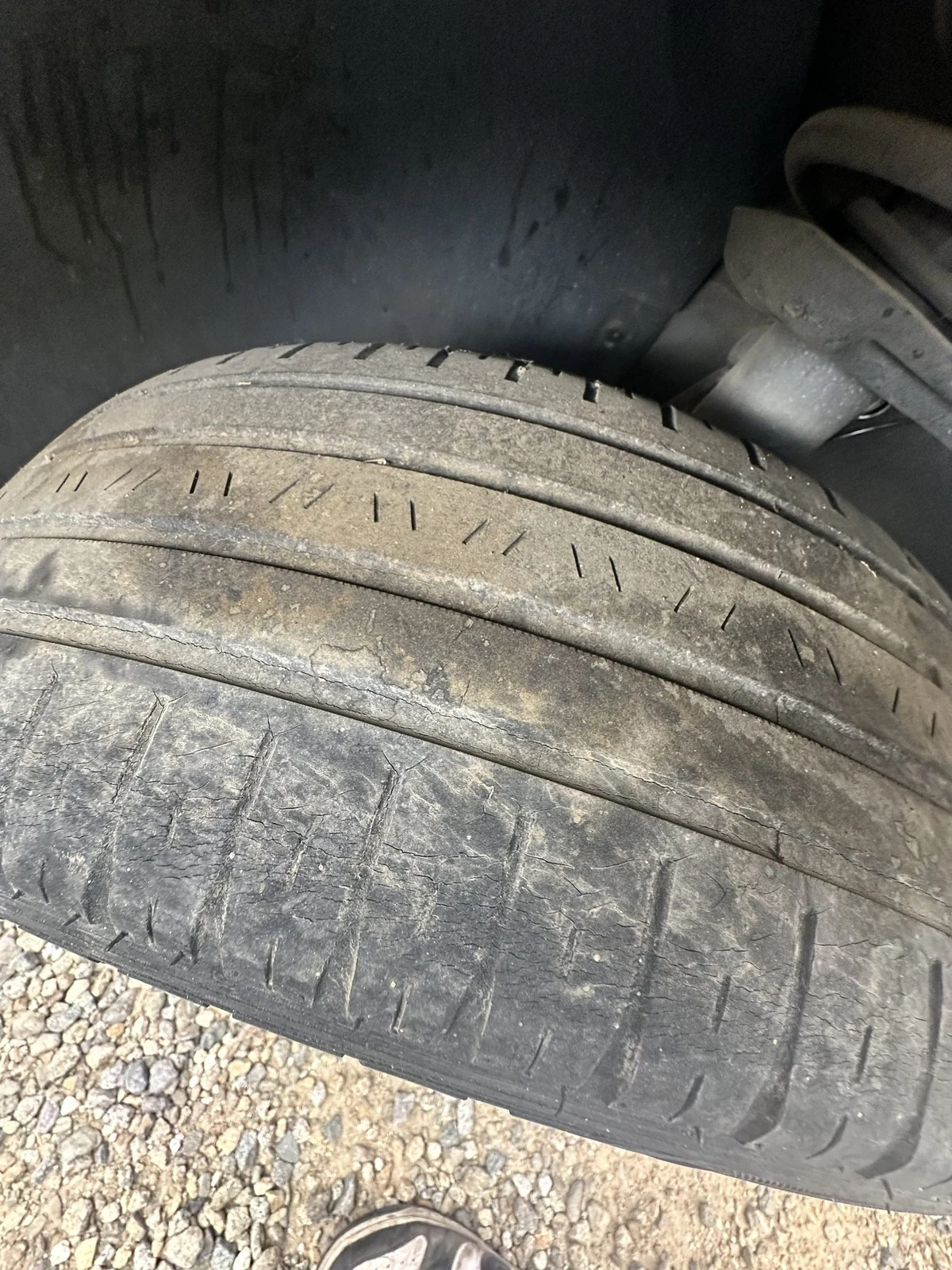
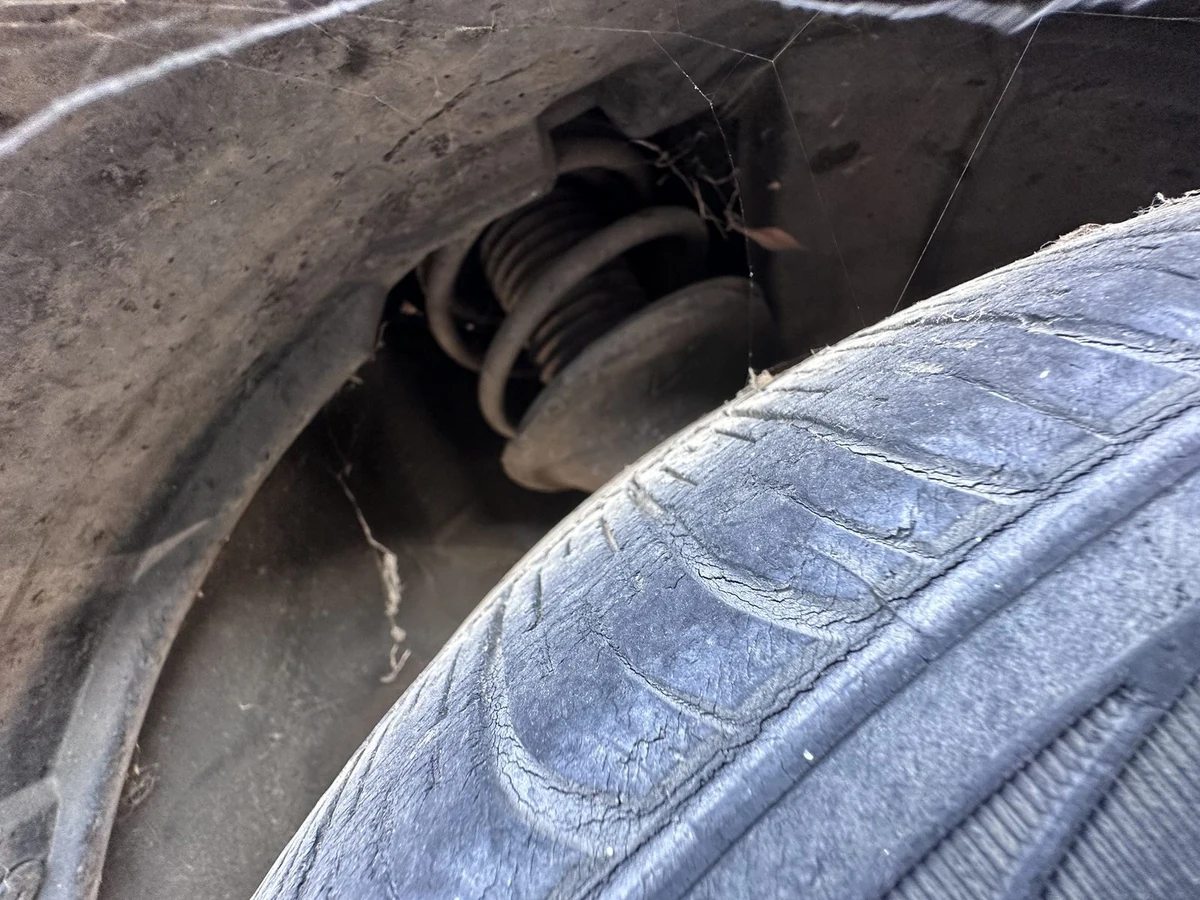
Look down into the grooves for the wear bars Small raised rubber bridges molded across the bottom of the tread grooves. When the tread is worn flush with them, the tire is done.. If the tread is flush with them, the tire is done. Then look at the sidewalls for cracks, bulges or cuts. Run a hand over the tread. Wear on just one edge usually means an alignment or pressure problem.
Check the Spare
The spare loses air too, and you only find out when you need it. If your car has one, check it now. The pressure for a small temporary spare is often much higher than the regular tires. It is printed on the spare or on the door sticker.
When to Stop and Call a Pro
- A tire keeps losing air week after week. It may have a nail, a leaking valve or a bent wheel.
- You see a bulge, a bubble, a deep cut or cords showing through the rubber.
- The tread is worn on one edge only, or in patches. That points to alignment or suspension parts.
- The tire pressure light stays on after every tire is at the right pressure.
- Your tires are about ten years old. Many tire makers say to replace them around then no matter how much tread is left. Check the DOT code A string of letters and numbers on the sidewall. The last four digits are the week and year the tire was made, so 2321 means week 23 of 2021..
No shame in it. Knowing when to stop is part of the skill. Find a mechanic near you on MechanicRank.
Questions People Ask
Should I use the pressure printed on the tire?
No. The number molded on the sidewall is the most the tire can safely hold. Your car's correct pressure is on the sticker in the driver's door jamb or in the owner's manual.
Why does my tire pressure light come on when it gets cold?
Cold air takes up less room, so pressure drops when the temperature drops. A common rule of thumb is about 1 PSI for every 10 degrees Fahrenheit. Check and top up after the first cold snap.
How often should I check my tires?
Once a month and before any long drive. It takes ten minutes and it is the cheapest safety check on the car.
Are gas station gauges accurate?
Some are, some are not. A cheap gauge of your own is more reliable. Use the station for air, and use your gauge for the reading.
Is the penny test really accurate?
It is a quick check, not a measurement. The distance from the edge of a penny to the top of Lincoln's head is about 2/32 of an inch, which is why it works. A tread depth gauge costs a few dollars if you want an exact number.